If you’ve ever dabbled in industrial cutting, medical aesthetics, or even just messed around with laser engravers for fun, you’ve probably heard the term fiber coupled laser modules thrown around. And if you’re here asking, “What’s their wavelength range?”—you’re not just a random hobbyist, right? You’re probably someone looking for a real answer, not some textbook jargon that makes your eyes glaze over. As a guy who’s been supplying these modules for years, I’ve talked to engineers, small business owners, and even hobbyists who thought “fiber coupled” just meant a laser with a fancy plastic cord. Let me break this down like I would over a coffee, no stuffy science terms required. Fiber Coupled Laser Modules
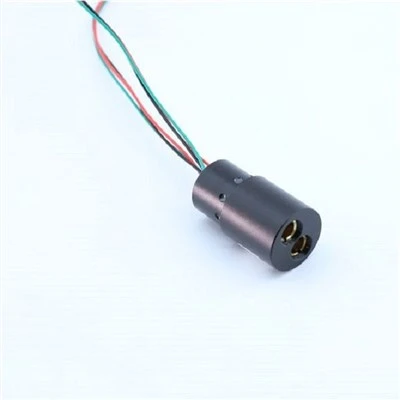
First off, let’s get one thing straight: fiber coupled laser modules aren’t a one-size-fits-all deal. Their wavelength range is tied directly to what you’re using them for. If you’re cutting steel for a metal fabrication shop, you’re not reaching for the same module someone would use for removing brown spots from skin at a med spa. That’s the core of it—wavelength is basically the “color” of the laser, and different colors play way nicer with different materials.
Let’s start with the most common wavelength I see folks asking about: 400nm to 1100nm. This is like the bread and butter of fiber coupled lasers. Wait, hold on—400nm is near the blue end of the visible spectrum, right? That’s why some of these modules give off a bright blue or violet glow, perfect for things like 3D printing curing (resin needs that exact wavelength to harden fast) or low-power engraving on plastics. Go up a little to 800nm to 980nm, and that’s where most of the high-power industrial stuff lives. 980nm is super efficient for pumping other lasers, but it’s also used in things like laser diodes for fiber optic communication. 1064nm is the big dog here—that’s the near-infrared wavelength most industrial fiber lasers use for cutting and welding metals. It’s invisible to the naked eye, but trust me, it’s powerful enough to slice through 2-inch thick steel like it’s butter. A lot of my repeat customers who run small machine shops swear by 1064nm modules because they’re reliable and don’t break the bank like the super custom ones.
Now, what if you need something longer? We’re talking 1500nm to 2000nm here. These are the mid-infrared modules, and they’re for way more specific jobs. For example, if you’re working with organic materials—like cutting fabric, wood, or even human tissue for medical procedures—1550nm is a solid pick. It’s absorbed really well by water, so it doesn’t burn through materials too fast, which is perfect for precision work. I recently sold a batch of 1550nm modules to a startup that makes custom surgical tools; they told me it cuts tissue cleanly without damaging the surrounding area, which was exactly what they needed. Another wavelength in this range is 1940nm, used a lot in dental lasers—so yeah, your next teeth cleaning might use a fiber coupled module in this range.
Wait, and let’s not sleep on the shorter end, even if it’s less common. Below 400nm is the ultraviolet (UV) range, like 266nm and 355nm. These are the high-precision guys. I’ve only sold a handful of these, but they’re huge for things like microchip manufacturing—engraving tiny circuits on silicon wafers where even a tiny bit of heat would mess everything up. UV lasers have super short wavelengths, so they can create really small, clean cuts without melting the material around the edge. A customer last year used one to make tiny laser-etched labels on medical devices, and he said the UV module didn’t smudge even when the device was autoclaved. That’s the magic here.
I should also mention that there’s a reason fiber coupled is such a big deal with these wavelengths. The fiber optic core doesn’t care what wavelength you’re pumping through it, as long as it’s the right size. That’s why you can get a module with a 1000nm laser and pair it with a fiber that delivers the beam exactly where you need it—no more misaligning parts on a big laser machine. Back when I first started in this business, we had a customer who was using a non-fiber coupled laser for their engraving machines; every few months, they’d have to realign the beam, which cost them days of downtime. Switching to our fiber coupled 1064nm modules fixed that immediately. The fiber carries the beam straight to the work area, so no more messing with mirrors or lenses.
But here’s the thing I wish more people knew: the range isn’t set in stone. Custom modules are totally a thing. I’ve had clients come to me with a specific wavelength in mind, like 1310nm for a new sensing device they’re building, and we can source or build a module just for them. Most of our standard stock covers 405nm (violet, for 3D printing), 808nm (pumping diodes), 980nm, 1064nm, 1550nm, and 1940nm, but if you need something outside of that? Just ask. We’ve got connections with manufacturers that can crank out a module tailored to your exact needs.
Let me also clear up a common misconception: higher wavelength doesn’t mean more power. A 10W 405nm UV module is way more precise than a 100W 1550nm mid-infrared one, but they’re built for totally different jobs. Power is a separate spec, though I will say fiber coupled lasers tend to have better beam quality than non-fiber ones, so even lower power can do more accurate work. I always tell customers to start with what they’re making, not just “more power.” If you’re engraving Lego bricks, a 1W 405nm module is enough. If you’re cutting ¼-inch aluminum, you’ll need at least a 50W 1064nm. No need to overspend on something too powerful for the job.
Over the years, I’ve noticed that a lot of first-time buyers get overwhelmed by all the wavelength options. They’ll come to me saying “I need a fiber laser module” and not know that picking the wrong wavelength will make their project fail. Last year, a guy who runs a small craft studio bought a 1550nm module thinking it was the same as the 1064nm he needed for cutting wood. He got it, hooked it up, and it barely left a mark—turns out 1550nm is absorbed too well by wood, so it only burns the surface. We swapped him for a 1064nm module at a discount, and he was able to get back to making custom wooden signs. That’s why I always take the time to ask questions about what they’re making, what material they’re using, and how precise they need the cut or engraving to be. A module is only as good as the wavelength for the job.
So putting it all together: the wavelength range for fiber coupled laser modules spans roughly 266nm (deep UV) all the way up to 2000nm (mid-infrared). The sweet spot for most industrial and hobbyist use is 400nm to 1100nm, with 1064nm being the workhorse. Mid-infrared (1500nm+) is for organic materials and medical work, while deep UV is for ultra-precision micro-manufacturing. There’s no “one” range, which is why there are so many options out there.
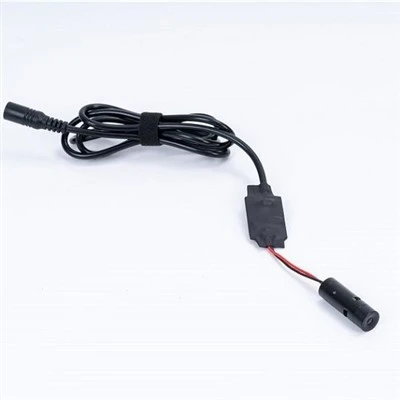
If you’re still scratching your head about what wavelength you need, or if you’re ready to place an order for a module, hit us up. We don’t do hard sell—we just ask about your project, point you to the right module, and make sure it works for you. No jargon, no hidden fees, just reliable fiber coupled laser modules that do what they’re supposed to.
Uniform Line Laser Modules References
- Laser Diode Wavelength Selection for Industrial Applications, Photonics Media
- Fiber Coupled Laser Modules: Design and Application, Laser Focus World
- Ultraviolet Laser Processing for Microelectronics, IEEE Transactions on Components, Packaging, and Manufacturing Technology
- Medical Fiber Lasers: Wavelength Choices and Clinical Uses, Journal of Biomedical Optics
Changshu Desheng Optics Electronics Co., Ltd.
As one of the most professional fiber coupled laser modules manufacturers and suppliers in China, our products have good reputation in the market. Please feel free to buy advanced fiber coupled laser modules for sale here from our factory. Good service and quality products are available.
Address: 8A, Yineng science and technology industrial park, No.183, Yinhe Road, Southeast Development Zone, Changshu, Jiangsu Province, China.
E-mail: desheng1@dershinelaser.com
WebSite: https://www.ds-lasers.com/
