As a bronze sculpture supplier who has been creating and selling these timeless pieces for over 12 years, I’ve lost count of how many times a fellow artist has come to me with that exact question: “How do I price my bronze sculptures?” It’s not an easy one to answer—underprice your work, and you undervalue the hours, skill, and material that go into every piece; overprice it, and you’ll struggle to find buyers who recognize its worth. Today, I want to walk you through the science, strategy, and heart behind pricing bronze sculptures, drawing from both my years in the foundry and the countless conversations I’ve had with artists who’ve been in your shoes. Bronze Sculptures
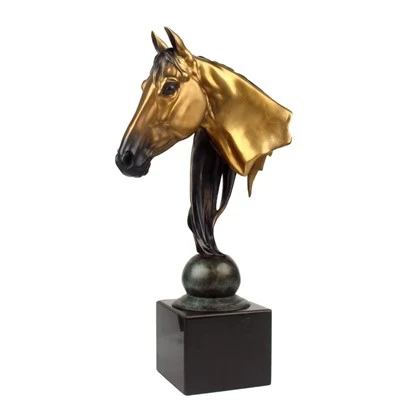
First, let’s get one thing straight: pricing isn’t just a numbers game. A bronze sculpture is a labor-intensive work of art. When a client buys a bronze, they’re not just paying for the metal itself—they’re paying for the months of planning, the lost wax casting process that requires precision I can’t even put into words, the patina work that can take days to perfect, and the years of training that let an artist turn a block of clay into something that feels alive. That foundation is non-negotiable, and it has to be part of every pricing decision.
Let’s start with the tangible costs, because you can’t build a fair price without covering these first. When I create a bronze, my team and I track every expense meticulously. The raw bronze material is a big one—we buy high-grade, recycled bronze ingots because they hold their value and create a richer, more durable finish. But we also factor in the cost of lost wax molds (each one is unique, even for a limited edition), labor for casting and chasing (the fine sanding and detailing after the metal is poured), patina supplies, shipping materials, and insurance for the sculpture before it leaves our studio. For a 24-inch abstract bronze, these tangible costs might add up to $800–$1,200. For a life-sized figurative piece, that number jumps to $3,000–$5,000, simply because of the amount of metal and labor involved. But here’s where I see so many artists go wrong: they stop here. They take their tangible costs, add a small markup, and call it a day. But that’s only half the equation.
Next, the labor component—and this is where many artists underprice themselves without even realizing it. How much time do you spend on a single sculpture? Let’s say you’re a medium-level artist who works 40 hours a week. To make a living, you need to account for every hour you spend on your art, not just the time spent in the foundry. That includes time designing the piece, creating the original model (whether it’s clay, wax, or another medium), revising based on feedback, documenting the work for your portfolio, and even marketing so someone knows your sculpture exists. A common rule of thumb I use in my studio is to calculate an hourly rate that reflects your experience. If you’re just starting out, your rate might be $25–$35 an hour; as you build a reputation and your skill, that can jump to $75–$150 an hour. For a small bronze that takes 40 hours to complete, that’s an additional $1,000–$6,000. For a larger piece that takes 200 hours, that’s $15,000–$30,000. When you add that to your tangible costs, you start to get a clearer picture—but there’s still more to factor in.
Limited editions are a big part of bronze sculpture sales, right? Unlike a painting, a bronze can be cast in a limited number of copies, usually 5–30, depending on the artist’s intent. The number of casts you make directly impacts the price. A piece in an edition of 10 will be more valuable than one in an edition of 25, simply because it’s rarer. I always advise artists to stick to an edition size that feels authentic to their work—don’t limit it just to drive up prices, but don’t flood the market either. For example, a medium bronze in an edition of 10 that costs $2,000 to make (tangible + labor) might retail for $6,000. The same piece in an edition of 25 might retail for $4,500, because there are more copies available. That ratio—usually 3x to 5x your combined tangible and labor costs—balances rarity, value, and accessibility for collectors. But it’s not a one-size-fits-all ratio. If you’re a well-known artist whose work is in museum collections, that ratio might be higher; if you’re just starting out, you might need a lower ratio to build your client base.
Now, let’s talk about market context. This is something many new artists overlook, but it’s make-or-break. You can create a perfect bronze, but if no one in your target audience is willing to pay your price, it’s not going to sell. I spend a lot of time looking at similar work: what do other bronze sculptors in your style, size, and experience level charge? If you’re making small, playful animal bronzes in the same style as an artist selling theirs for $3,000, don’t price yours at $1,500—or $5,000. That either signals your work is lower quality or that you’re out of touch with the market. I also consider where the sculpture will be sold: a gallery will charge a 50% commission, so you need to price the piece to cover that commission and still make a fair profit. If you sell directly from your studio, you might price 2x to 3x your combined costs, because you’re cutting out the middleman. That’s why many artists sell studio pieces for less than gallery prices—it makes sense for both you and the collector.
Value isn’t just about money, though. Collectors buy bronzes because they’re timeless, durable, and hold (or increase) their value over time. That’s why the quality of your bronze matters so much. If you use cheap bronze that tarnishes quickly or has defects, you can’t charge as much. But if you work with a reputable foundry (like mine, for sculptors who want consistency), use high-grade metal, and pay attention to every detail, your piece will be seen as a valuable investment. I’ve had clients tell me they bought a bronze 10 years ago for $5,000 and sold it for $12,000 because it was well-made. That’s the value you’re building, and it should factor into your pricing. For emerging artists, building that reputation takes time—so it’s okay to start with a lower price that reflects your work’s potential, as long as you’re not undervaluing the effort.
I also want to talk about hidden costs that many artists forget. When I price a sculpture, I include things like studio rent, utilities, tools (I go through a lot of chisels and wax tools), software for design, health insurance, and even the time it takes to teach workshops or give back to the art community. These are business expenses, just like the bronze or mold costs, and they have to be part of your pricing. If you don’t account for these, you’ll end up working for free—or even losing money—over time. I once knew an artist who priced his life-sized bronze at $10,000, but when he added up all his business expenses, he realized he was only making $500 after all costs. That’s not sustainable.
Let’s put this all together with a real example from our studio. Last year, a young sculptor came to us with a 18-inch abstract bronze of a bird. He’d spent 50 hours designing, modeling, and casting it. His tangible costs: $600 for bronze, $150 for mold supplies, $100 for patina, $50 for shipping. Total tangible costs: $900. His hourly rate as an emerging artist was $30 an hour, so labor was 50 x $30 = $1,500. Combined costs: $2,400. He wanted to price it at $3,000, which is a 1.25x markup. But when we looked at the market, similar small abstract bronzes from emerging artists were selling for $3,500–$4,000. We suggested he adjust his price to $3,600. It sold within two weeks, and he went on to price his next piece the same way. That’s the balance: covering your costs, paying yourself fairly, and matching what the market will bear.
For larger works, the process is similar but scaled. A life-sized figurative bronze might take 200+ hours, with tangible costs of $4,000–$6,000. An established artist with a rate of $100 an hour would have labor costs of $20,000. Combined, that’s $24,000–$26,000. With a 3x markup for a limited edition, the retail price would be $72,000–$78,000. That might sound high, but collectors know a life-sized bronze is a piece that will last for generations, and it’s comparable to prices at major galleries.
Now, let’s address the elephant in the room: what if you’re just starting out? When I launched my studio 12 years ago, I priced my first small bronze at $800. My costs were $300 tangible, 40 hours of labor at $12 an hour—total $780. I only made $20 profit, but that’s okay. At the time, I needed to build my portfolio, get my work in front of collectors, and prove my skill. Over time, as I gained clients and refined my process, I increased my prices. That’s a smart strategy for new artists: start with a price that covers your costs and lets you make a small profit, and raise it as you build your reputation. Don’t undersell yourself for too long, though—you deserve to be paid fairly for your art.
I also want to share a common mistake I see artists make: pricing based on what they think people will pay, not what their work is worth. A sculpture isn’t a commodity like a mug or a shirt. It’s a unique, handcrafted piece of art that carries your vision, your skill, and your story. If you price it too low, you’re not just losing money—you’re telling buyers it’s not valuable. That’s why I always encourage artists to track every cost, calculate their time, research the market, and then set a price that respects both their work and the collector.
At the end of the day, pricing bronze sculptures is a mix of science and intuition. The numbers are there: track your costs, calculate your labor, look at the market. But the intuition comes from knowing your own work—what makes your bronze different, what makes it special, and who will cherish it. For me, that’s why I’ve been in this business for so long: every sculpture I create is a part of me, and I want to sell it to someone who will value it as much as I do.
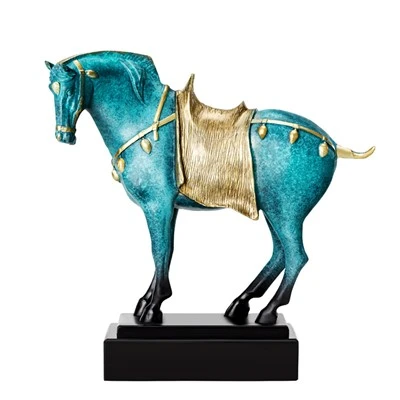
If you’re an artist creating bronze sculptures and you’re ready to talk through your pricing, or if you’re a collector looking to learn more about bronze art, I’d love to connect. Let’s chat about your work, your goals, and how we can help you price your sculptures in a way that works for both you and your buyers. Together, we can make sure every piece of bronze art finds the right home, at a price that reflects its true value.
Stainless Steel Landscape Sculpture References:
- Smith, J. (2020). The Artist’s Guide to Pricing Handcrafted Work. Art Business Press.
- Jones, L. (2018). Bronze Sculpture: History, Technique, and Market Value. Sculpture Journal Books.
- Davis, M. (2021). Sustainable Pricing for Creative Entrepreneurs. Creative Wealth Collective.
- National Sculpture Society. (2022). Market Trends in Contemporary Bronze Art. Annual Industry Report.
Huizhou Hexin Intelligent Manufacturing Industrial Co., Ltd.
Huizhou Hexin Intelligent Manufacturing Industrial Co., Ltd. is one of the most professional bronze sculptures manufacturers and suppliers in China. Please feel free to buy the newest bronze sculptures made in China here and get pricelist from our factory. All customized products are with high quality and competitive price.
Address: No. 31, Second Industrial Zone, Nankeng Village, Xinxu Town, Huiyang District, Huizhou City, Guangdong Province, P.R.China
E-mail: hztbjr@126.com
WebSite: https://www.bronzehexin.com/
