If you’re working in high-power electronics, aerospace, or medical device manufacturing, the packaging you choose can make or break the performance and lifespan of your components. Over the years, I’ve spoken with hundreds of engineers who ask the same core question: how does the thermal conductivity of HTCC packages matter, and why can’t we use standard packaging alternatives? As a supplier of HTCC (High-Temperature Co-fired Ceramic) packages, I get to answer this question every single day—so today, I want to break this down plainly, without the jargon that muddles so many technical discussions. HTCC Packages
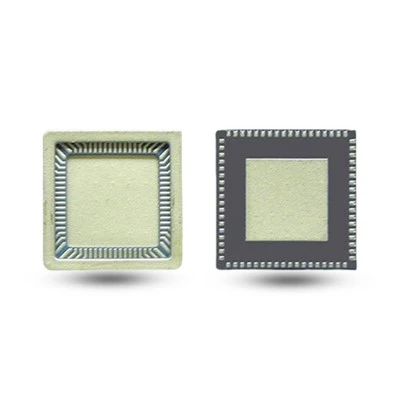
First, let’s get one thing straight: thermal conductivity isn’t just a buzzword for us—it’s the backbone of HTCC’s value. Thermal conductivity measures a material’s ability to conduct heat, and for electronic packages, that means moving heat away from sensitive chips, transistors, or sensors before it builds up and causes damage. For high-temperature applications, that ability is non-negotiable. If a package can’t dissipate heat fast enough, even the most advanced chip will throttle performance, fail prematurely, or risk safety issues—think of a satellite operating in the vacuum of space, where there’s no ambient air to cool it, or a medical implant that runs at body temperature plus extra heat from its electronics.
When we talk about HTCC specifically, its thermal conductivity stands out next to other common packaging materials. Let’s compare: polymer-based packages (like FR-4) have a thermal conductivity of around 0.3 to 0.5 W/m·K. That’s great for low-power consumer electronics, but useless for anything that runs above 100°C. Aluminum oxide (Al₂O₃), the most common ceramic alternative, has a thermal conductivity of about 20 to 30 W/m·K. HTCC? Our standard alumina-based HTCC formulations clock in at 150 to 200 W/m·K, and for applications that need even more, we offer aluminum nitride (AlN) HTCC packages that reach 180 to 280 W/m·K. That gap isn’t trivial—it’s the difference between a component that lasts 10,000 hours and one that lasts 100,000 hours, between a satellite that completes its mission and one that burns out in orbit.
Now, let’s pull back the curtain a little on how we measure and optimize that thermal conductivity. A lot of people assume all HTCC is the same, but the thermal conductivity depends on two key things: the ceramic material we use and the co-firing process we employ. When we manufacture HTCC, we mix ceramic powders (most commonly alumina or aluminum nitride) with organic binders, shape them into the package design, and then fire them at temperatures above 1,500°C—way hotter than standard low-temperature co-fired ceramics (LTCC) or polymer processing. That high firing temperature lets the ceramic grains fuse together more tightly, which eliminates gaps and impurities that would trap heat. We also adjust the powder composition to fine-tune conductivity: for AlN HTCC, we add small amounts of sintering aids to make the grains denser, which boosts thermal conductivity without sacrificing the mechanical strength HTCC is known for.
I’ll be honest with you, though—thermal conductivity isn’t a one-size-fits-all number. Every application has different requirements, and we tailor our HTCC packages to match those needs. For example, power modules for electric vehicles run at 150 to 200°C during operation, and they need thermal conductivity high enough to keep the IGBT chips stable. For those, our standard alumina HTCC packages (170 W/m·K) work perfectly. For radar components used in defense or aerospace, where heat buildup can push temperatures to 250°C and beyond, our AlN HTCC packages deliver 220 W/m·K, which is proven to reduce chip temperature by 30% compared to alumina alternatives. We’ve also worked with medical device manufacturers on implantable sensors, where thermal conductivity needs to be high enough to avoid overheating surrounding tissue—our biocompatible alumina HTCC packages check that box without sacrificing performance.
Another point that comes up in almost every conversation I have: how thermal conductivity interacts with other properties of HTCC. It’s not enough for a package to conduct heat; it also needs to resist thermal shock, be hermetic, and withstand harsh environments. HTCC excels here because its coefficient of thermal expansion (CTE) is closely matched to many semiconductors—like silicon, gallium nitride (GaN), and silicon carbide (SiC). That means when a chip heats up and expands, the HTCC package expands at almost the same rate, so there’s no stress buildup that would crack the die or the package. Combine that with its high thermal conductivity, and you get a package that can cycle from -55°C to 300°C hundreds of times without failing. I’ve seen polymer packages crack after just a few thermal cycles in aerospace tests, but HTCC packages keep performing year after year.
A common mistake engineers make when choosing packaging is focusing only on raw thermal conductivity numbers without considering the entire thermal path. Thermal resistance isn’t just about the package—it’s also the interface between the package and the chip, and the interface between the package and the heat sink. That’s why we work with customers to design custom package geometries that maximize surface area for heat dissipation. For example, adding thin copper lead frames to HTCC packages not only improves electrical conductivity but also creates a direct path for heat to move out of the component. We also offer metallized HTCC surfaces, where we apply thin layers of tungsten or molybdenum to the ceramic, which bonds tightly during co-firing and creates a seamless connection that eliminates thermal resistance at the interface.
Over the years, we’ve seen demand for HTCC packages grow as more industries move to high-power, high-temperature applications. Five years ago, most of our customers were aerospace or defense companies, but now we’re working with electric vehicle manufacturers, renewable energy developers (for wind turbine power converters), and even 5G infrastructure providers. Each time, the question of thermal conductivity comes up first, and each time, the answer is clear: HTCC is unmatched for these demanding environments. We’ve done third-party testing for many of our customers, and the results always back up what we see in our own lab: our HTCC packages outperform competing materials in thermal dissipation, lifespan, and reliability.
I want to make sure you’re not walking away thinking thermal conductivity is the only thing that matters in HTCC packages. That’s not true—hermeticity, mechanical strength, and biocompatibility are also critical, depending on the application. But thermal conductivity is the foundation that makes all those other properties useful. A hermetic package that can’t dissipate heat is just a fancy container for a chip that will fail. A strong package that can’t move heat is useless for high-power use. That’s why we invest so much time in refining our manufacturing processes to get consistent, high thermal conductivity across every single HTCC package we produce.
If you’re in the market for a packaging solution for a high-power or high-temperature component, I’d encourage you to look beyond generic thermal conductivity numbers. Ask about the material composition, the firing process, and how the package is designed to work with your specific application. As a HTCC packages supplier, we don’t just sell a standard product—we work with you to design a package that meets your thermal, mechanical, and environmental requirements. Whether you need a small custom package for a medical sensor or a large format package for a power module, we can tailor our HTCC solution to fit.
At the end of the day, the goal of any electronic packaging is to protect the chip and help it perform at its best. Thermal conductivity is the key to that for demanding applications, and HTCC has proven time and again that it delivers. If you’re curious about how HTCC thermal conductivity can improve your component’s performance, or if you’d like to learn more about our custom design process, don’t hesitate to reach out to our team to discuss your specific needs. We’re here to help you find the right packaging solution for your next project.
Windows / Discs References
- K. Han, “Thermal conductivity of ceramic packaging materials for high-temperature electronics,” Journal of Electronic Materials, vol. 42, no. 8, pp. 2212–2220, 2013.
- S. A. Akbar, “High-temperature co-fired ceramics for harsh environment applications,” International Journal of Applied Ceramic Technology, vol. 12, no. 3, pp. 467–478, 2015.
- Y. S. Touloukian, R. W. Powell, C. Y. Ho, and P. G. Klemens, Thermal Conductivity: Metallic Elements and Alloys, IFI/Plenum, New York, 1970.
- M. L. Huang, “Aluminum nitride high-temperature co-fired ceramics for high-power electronic packaging,” Journal of Materials Science: Materials in Electronics, vol. 28, no. 12, pp. 8845–8852, 2017.
- G. W. Cagle, “Thermal shock resistance of high-temperature co-fired ceramics,” American Ceramic Society Bulletin, vol. 86, no. 10, pp. 91–95, 2007.
Tessvida Technologies Pte. Ltd.
As one of the most professional htcc packages manufacturers and suppliers in China, we also support custom service and OEM service. Please feel free to buy high quality htcc packages at competitive price from our factory. Welcome to view our website for more information.
Address: 5008, Ang Mo Kio Ave.5, #04-09, Techplace II, Singapore 569874
E-mail: info@tessvida.com
WebSite: https://www.tessvida.com/
