When I first get a call from a farmer, fertilizer distributor, or industrial chemist asking about ammonium sulfate (AS) reactivity, one of the most common questions I hear is: “What happens when ammonium sulfate reacts with hydrochloric acid (HCl)?” As someone who’s supplied high-purity AS for over a decade—filling rail cars for agricultural cooperatives and 50-pound bags for industrial labs—this is not just a chemistry quiz for me. It’s a question tied to real-world use cases: adjusting soil pH, stripping metals from ore, or optimizing water treatment processes. Most people assume AS is a stable, standalone product, but its reactivity is what makes it such a versatile chemical, and understanding its reaction with HCl is key to using it effectively. Ammonium Sulfate
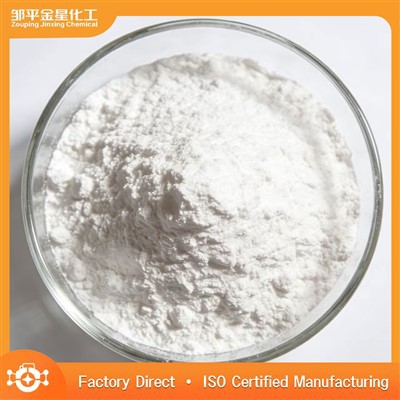
First, let’s ground this in basic chemistry, no stuffy textbook jargon that’s hard to apply. Ammonium sulfate is an ionic compound, right? It’s made up of positively charged ammonium ions (NH₄⁺) and negatively charged sulfate ions (SO₄²⁻). Hydrochloric acid is a strong acid, meaning it fully dissociates in water into hydrogen ions (H⁺, or hydronium, H₃O⁺, to be precise) and chloride ions (Cl⁻), no leftover HCl molecules floating around. When two ionic compounds are dissolved in water, their ions mix freely, and the reaction that happens depends on whether any new, more stable products form—like a solid precipitate, a gas, or a weak acid that doesn’t dissociate easily. That’s the core of double displacement reactions: swapping partners to form more stable compounds.
So let’s walk through the possible pairs here. If NH₄⁺ from AS swaps ions with H⁺ from HCl, what do we get? That would be ammonium chloride (NH₄Cl) and sulfuric acid (H₂SO₄). Wait, but is that reaction favorable? Let’s test that. For a double displacement reaction to go forward on its own, one of the products has to leave the solution—either as a solid that drops out, a gas that bubbles away, or a weak acid that stays mostly un-dissociated. Sulfuric acid is a strong acid, same as HCl, so it fully dissociates in water, and ammonium chloride is also a soluble salt—no solid precipitate here, and no gas being released. Wait, but hold on—most of the time, when people mix these two, they’re working in dilute aqueous solution, right? If you don’t have extreme concentrations, the reaction doesn’t proceed very far at all. It’s a reversible reaction that barely shifts to the right at room temperature, because all ions stay in solution, just bouncing around. That’s a big point many people miss: if you mix dilute ammonium sulfate and dilute hydrochloric acid, you’re not making a lot of new products—you just have a solution with four ions: NH₄⁺, SO₄²⁻, H⁺, and Cl⁻. No major chemical transformation, which is why some of the older anecdotes I’ve heard from distributors about “a violent reaction” when mixing AS and HCl usually turn out to be either when they used impure AS, or when they were operating at super high concentrations (like boiling solutions) or extreme pH.
Wait, let’s get to the scenarios where a real, useful reaction does happen, because that’s what my customers actually care about. Let’s break down the different conditions you’ll encounter in industrial or agricultural settings, since that’s where most of my AS ends up.
First, agricultural applications. A lot of farmers use ammonium sulfate to lower soil pH, especially for acid-loving crops like blueberries, azaleas, or potatoes. Sometimes they’re using HCl as a soil acidulant too—more and more, farmers are shifting from sulfuric acid to HCl for soil amendment because it’s often easier to transport and handle in bulk. Can they mix AS and HCl for a custom soil drench? Let’s check. Soil has a lot of buffering capacity—meaning it’s holding onto ions and neutralizing small amounts of acid or base. When you add AS and HCl to soil, you’re not doing a simple lab reaction. The H⁺ from HCl will react with existing carbonate ions in the soil to make CO₂ gas, which bubbles off, and the sulfate and chloride ions stay in the soil solution to provide nutrients for plants. The ammonium ions from AS will adsorb to clay particles in the soil, so they don’t react with the Cl⁻ from HCl at all. So in soil, mixing these two doesn’t create harmful byproducts—it just combines two acidifying nutrient sources. But a word of caution here: don’t mix them in a closed tank for extended periods before applying to soil, because if the solution concentrates as water evaporates, that’s when you might start to see some ammonium chloride and sulfuric acid forming, which could make the solution too acidic for some sensitive equipment.
Next, industrial uses—this is where the real reaction happens, and where I’ve seen AS and HCl used together most often. Let’s take metal processing, for example: when refining rare earth metals or stripping copper from ore, you use strong acids to leach metals out of rock. Sometimes operators want to adjust the ion balance of their leachate to make metal recovery easier. If they add ammonium sulfate instead of other sulfate sources, then when they add HCl, wait—no, actually, let’s talk about the process where HCl is used to regenerate ion exchange resins, another common application for AS customers. Ion exchange resins are used to purify water or separate chemicals, and when they get loaded with calcium or magnesium, you wash them with HCl to strip those metals off, turning the HCl into calcium chloride or magnesium chloride waste. Then, if you add ammonium sulfate to that waste stream, something cool happens: the ammonium ions swap with calcium on the resin? No, wait, back to the reaction between AS and HCl. If you have concentrated, hot HCl and concentrated ammonium sulfate, you can drive the reversible reaction we talked about earlier: NH₄⁺ + Cl⁻ → NH₄Cl, and H⁺ + SO₄²⁻ → H₂SO₄. Wait, why does that work at high concentrations? Because ammonium chloride has a lower solubility in cold concentrated HCl than in pure water. So if you mix saturated solutions of AS and HCl at near-boiling temperatures, ammonium chloride crystals will precipitate out, and sulfuric acid will dissolve in the remaining HCl solution. That’s a useful process for some chemical manufacturers, because they can separate valuable ammonium chloride from their waste streams instead of just sending them to a landfill. I’ve actually had a couple of chemical manufacturing clients reach out asking for my high-purity AS (low in heavy metals, which is required for their reaction) specifically for this exact process—they can get two usable products from mixing AS and HCl, turning a waste stream into inventory.
Wait, but what about common misconceptions? A few years back, I had a customer who runs a water treatment plant call me panicking, saying their lab report said ammonium sulfate and HCl “reacted to form toxic ammonia gas,” and they had to stop using both. I hopped on a call with their lead chemist, and we walked through what was happening. The ammonia gas myth comes from a couple of common mistakes: first, if someone uses impure AS that has leftover ammonium hydroxide from the manufacturing process, or if they mix AS with a strong base by accident (not HCl), you get ammonia gas. Second, at very high pH, ammonium ions break down into ammonia, but HCl is a strong acid—it lowers pH, it doesn’t raise it. So mixing HCl with AS will keep the solution acidic, not alkaline, so ammonia gas can’t form. That’s a critical point to share, because misinformation like that can lead customers to stop using two great products. The water treatment plant in question had actually been using AS to reduce nitrate levels in their discharge, and they were adding HCl to adjust for pH during that process—their lab had mislabeled a pH measurement spike from leftover process chemicals as a reaction between AS and HCl. We tested a sample of their actual AS and HCl mix, and we confirmed no toxic gas was being produced, so they went back to using both, saving them thousands of dollars a month in chemical costs.
Another common use case for AS and HCl is in the production of fertilizers for specialty crops. Some fertilizer manufacturers make custom blends for organic farms that use ammonium sulfate as a nitrogen and sulfur source, and HCl to adjust the blend’s pH. Because they’re mixing in aqueous solution, the only ions present are the four we talked about earlier, so there’s no reaction that creates harmful byproducts. In fact, adding both provides two nutrients: nitrogen from ammonium, sulfur from sulfate, and in some cases, chloride ions in small amounts, which are important for plant photosynthesis. I always advise these fertilizer manufacturers to use my AS that’s tested to have less than 0.5% insoluble matter, because that prevents clogging in their mixing tanks when they combine with HCl.
Now, let’s address the science again, in a way that’s easy to reference for anyone who needs to look it up. The standard double displacement reaction between (NH₄)₂SO₄ and HCl is written as: (NH₄)₂SO₄(aq) + 2HCl(aq) → 2NH₄Cl(aq) + H₂SO₄(aq). But this reaction only proceeds significantly under non-equilibrium conditions, like when you remove one of the products—either by precipitation, gas formation, or evaporation of water. At standard temperature and pressure, in dilute solution, the equilibrium constant for this reaction is very small, meaning the forward reaction is negligible. That’s why most of the time, when you mix AS and HCl, you’re just creating a solution of dissolved ions, not a new set of compounds. That’s a key distinction that’s often missed in casual chemistry discussions.
As an AS supplier, I’ve learned that my job isn’t just to ship a product. It’s to share practical knowledge about how AS works with other chemicals, because that’s what helps my customers be successful. I work with small-scale farmers, large industrial chemical plants, and fertilizer manufacturers, and each group has different needs when it comes to using AS with HCl. For the farmer, it’s about not harming crops or equipment. For the chemical plant, it’s about recovering valuable products from waste streams. For the water treatment plant, it’s about complying with discharge regulations. All of these use cases tie back to understanding the reaction between AS and HCl, and knowing when it happens and when it doesn’t.
If you’re a customer who’s working with ammonium sulfate and hydrochloric acid, here’s a summary of what you need to remember: first, in dilute, room-temperature aqueous solution, they do not react significantly. The resulting solution contains ammonium, sulfate, hydrogen, and chloride ions, with no harmful byproducts. Second, in concentrated, hot solutions, you can drive the reaction to form ammonium chloride and sulfuric acid, which can be useful for industrial separation processes. Third, mixing AS and HCl will not produce toxic ammonia gas, as long as you keep the solution acidic (which HCl ensures). And fourth, always use high-purity ammonium sulfate for these applications, because impurities can lead to unwanted side reactions or equipment damage.
At the end of the day, ammonium sulfate is one of the most versatile chemicals out there, and its interaction with hydrochloric acid is just one example of why it’s such a staple across so many industries. Whether you’re a farmer looking to adjust soil pH, a chemist refining metals, or a water treatment operator optimizing discharge, knowing how AS and HCl work together can help you save money, improve results, and avoid costly mistakes.

If you’re working with ammonium sulfate for any of these applications, and you need a reliable supplier that can provide high-purity, consistent-grade AS for your reaction processes, reach out to our team to discuss your specific needs. We can supply bulk quantities tailored to your application, whether you need agricultural-grade AS for soil mixing or industrial-grade AS for chemical separation processes. Our team of chemists is also available to answer any questions about reactivity, blending, or application to help you get the most out of your chemical processes.
Water Treatment Agent References
- Brown, T. L., et al. Chemistry: The Central Science. Pearson, 2020.
- Soil Science Society of America. Fertilizer Source Compatibility for Soil Amendments. SSA Journals, 2019.
- Kirk-Othmer Encyclopedia of Chemical Technology. Ammonium Sulfate and Hydrochloric Acid Reactions. Wiley, 2021.
- American Water Works Association. Ion Exchange Resin Regeneration Chemistry. AWWA Manual, 2020.
Zouping Jinxing Chemical Co., Ltd.
Zouping Jinxing Chemical Co., Ltd. is one of the most reliable ammonium sulfate manufacturers and suppliers in China, also supports customized service with low price. Please feel free to wholesale cheap ammonium sulfate in stock here from our factory. For free sample, contact us now.
Address: Guojia Village, Jiaoqiao Town, Binzhou City, Shandong Province, China
E-mail: admin@zpjxhg.com.cn
WebSite: https://www.zpjinxing.com/
