If you’ve ever visited a fabrication yard, a countertop shop, or a construction site working with natural stone, you know stone machines are the unsung heroes of the trade. From tile saws and bridge cutters to CNC routers and stone polishers, these tools turn raw, bulky blocks of granite, marble, quartz, and engineered stone into the finished countertops, floor tiles, and custom architectural features clients rely on. As a stone machine supplier, I see firsthand how these machines make complex jobs faster, more precise, and less physically demanding than cutting stone by hand—but I also see the risks that come with rushing through setups, skipping small safety checks, or writing off basic precautions as “standard industry knowledge.” Over 12 years in this business, I’ve worked with fabricators new to the trade and seasoned veterans, and I’ve seen injuries that range from minor cuts to chronic respiratory issues—all entirely preventable. Today, I’m breaking down the science-backed safety precautions for using stone machines, tailored to every role that touches these tools, from setup to daily operation to maintenance. Stone Machine
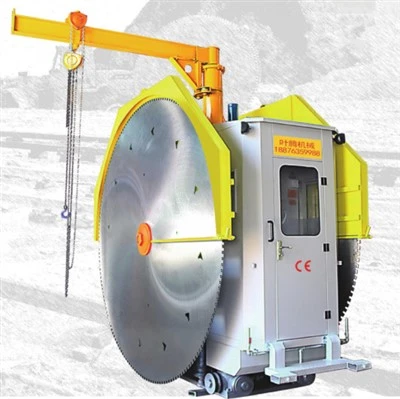
First, let’s talk about the most immediate, visible risk: physical injury from moving machine parts. Stone machines are built to exert massive force to slice through dense, abrasive stone, and their blades, cutters, and rotating heads don’t differentiate between rock and fingers, arms, or loose clothing. The biggest mistake I see new operators make is skipping lockout/tagout (LOTO) procedures, even for quick, 2-minute tasks like adjusting a blade or clearing a jam. Let’s get clear on what LOTO actually means, because it’s not just industry jargon: when any part of a stone machine’s power system is exposed, from plugging into a wall outlet to accessing a hydraulic line, you must turn the machine off, unplug it (or disconnect the power source if it’s 3-phase), and affix a personal lock and tag to the power switch. This is non-negotiable, because even machines that were just running can have residual energy in their motors or blade hubs—one accidental tap on the power switch while you’re reaching under the guard can send that 100-pound diamond blade spinning at 3,000 RPM, no second chance. For larger bridge saws or CNC routers that require external power sources, LOTO also applies to auxiliary power lines, like air compressors that feed dust extraction systems or vacuum holds that secure stone slabs. I’ve had a customer tell me once that he skipped LOTO to clear a small stone jam on his bridge saw, and when he reached in, the blade nudged his sleeve, pulling his forearm into the gap between the blade and the guard—he missed two weeks of work and had to replace a good set of work pants. That’s not a “freak accident”; that’s cutting corners on a basic safety step.
Next up: guarding and personal protective equipment (PPE), two areas where I see the most inconsistent compliance, even among experienced operators. Modern stone machines come with engineered safety guards for a reason—those metal or plastic shields are not just there to meet OSHA standards, they’re designed to catch flying stone chips, prevent contact with moving blades, and contain water for wet-cutting machines (more on that later). I can’t tell you how many fabricators will remove the blade guard to get a “better view” of their cut, or because the guard gets in the way of a tricky angle. That’s a mistake because stone generates sharp, high-velocity chips when cut, and a guard is the only thing standing between your face and a piece of granite moving at 150 feet per second. For PPE, let’s go beyond the basic hard hat and steel-toe boots—though those are non-negotiable. For operators of any stone machine, the three non-negotiable PPE categories are eye and face protection, respiratory protection, and hearing protection. For eyes: not just regular safety glasses, but ANSI Z87.1-certified goggles or face shields, because even wet cutting can produce silica chips that splash up and cause corneal scratches. For respiratory protection: this is a big one that many people overlook. Silica dust, the tiny, fine particles released when cutting natural stone like granite or engineered quartz, is classified as a Group 1 carcinogen by the International Agency for Research on Cancer (IARC). Breathing in these particles over time leads to silicosis, a permanent, incurable lung disease that can take decades to develop. The science here is clear: even if you work in a well-ventilated space, dust from stone machines is fine enough to stay airborne for hours, so cloth masks or even standard N95 masks aren’t enough. You need either a powered air-purifying respirator (PAPR) with a P100 filter, or a half-face respirator with N95 filters rated for silica exposure. For hearing: stone machines, especially wet saws and polishers, operate at 85 to 105 decibels—roughly the same as a lawnmower or a motorcycle. Extended exposure without hearing protection (earplugs or earmuffs) leads to permanent noise-induced hearing loss, which is also irreversible. I always supply free spare earplugs with every machine I sell, because I’ve seen too many operators dismiss hearing protection as a “nuisance” only to develop tinnitus or hearing loss a few years into their career.
Moving on to machine-specific precautions, because a bridge saw is not the same as a handheld angle grinder, and a CNC router is not the same as a tile saw. Let’s start with wet-cutting machines, which are the most common for precision stone work. Wet cutting uses a steady stream of water to cool the diamond blade and suppress silica dust—this isn’t just a “best practice,” it’s a safety requirement. When a blade runs dry, it overheats, becomes brittle, and can shatter violently, sending shards of blade and stone across the shop. I remember a customer who tried cutting a small marble tile without water to save time, and the blade shattered at 2,500 RPM; a shard hit his shop’s cinder block wall and chipped a hole, and he was lucky it didn’t hit him. For wet saws, the key precaution is to never operate the machine until you confirm the water line is clear, the water reservoir is full, and the flow rate is consistent—too little water and the blade overheats, too much water and it can pool on the floor, creating a slip hazard. For larger bridge saws that cut full stone slabs, there are extra precautions: always make sure the slab is properly secured to the saw’s vacuum table before turning on the blade. A 500-pound granite slab can shift if the vacuum isn’t set correctly, crashing into the blade or the machine frame. For CNC stone routers, which are used for detailed engraving and shaping, the big risk is operator error with the machine’s programming and tooling. Never run a CNC router from the control panel while you’re inside the work envelope (the area where the cutter moves)—always stand outside the enclosure or behind the safety fence, and never bypass the machine’s motion limiters, which are designed to stop the cutter if it gets too close to the edge of the stone or the machine frame. I’ve worked with fabricators who modified their CNC’s software to make cuts faster, and they ended up with the cutter crashing into a steel fixture, bending the cutter shaft and damaging the machine beyond repair—plus, a flying cutter bit could have injured someone.
Maintenance is another area where safety is often an afterthought, but poorly maintained stone machines are just as dangerous as uncalibrated tools. I see a lot of operators wait until a machine stops working to perform maintenance, but basic, regular checks prevent most accidents. For example, a loose blade on any stone machine can wobble, leading to uneven cuts or the blade coming loose entirely. Every morning before starting work, I recommend checking blade tightness, making sure the arbor (the shaft the blade attaches to) is free of rust or debris, and inspecting the blade for chips or cracks—even a small crack in a diamond blade can grow during use and cause it to shatter. For dust collection systems, which are critical for respiratory safety, you need to empty the dust filter at least once a day (more if you’re running the machine for 8+ hours) and inspect the ductwork for clogs. A clogged dust collection system means silica dust is blowing back into the shop, not being pulled out, so even with a respirator, you’re at risk of exposure. Also, for hydraulic systems on larger machines, check for leaks regularly—hydraulic fluid under high pressure can pierce skin and cause serious injury, so any visible leaks need to be fixed before operating the machine. Never attempt to adjust hydraulic lines or lubricate moving parts while the machine is running; always turn it off and disconnect power first.
Finally, let’s talk about shop layout and training, because even the safest machine in the world is useless if your shop is set up for accidents. I always advise my customers to design their stone fabrication shop with clear, unobstructed pathways between machines, so no one has to walk through a work area while a machine is running. Keep all power cords and hoses tucked away, so no one trips or pulls on them, which could cause a machine to lurch. For new operators, hands-on training is non-negotiable—online tutorials can teach you the basics, but nothing beats working alongside an experienced operator for 40 to 80 hours, learning how to adjust blade speed for different stone types, recognize when a blade is getting dull, and respond to a minor emergency like a small jam. I offer free on-site training for every machine I sell, because I’ve seen too many fabricators buy a machine online, watch a 10-minute video, and get hurt because they didn’t know how to properly secure a stone slab or adjust the water flow. Also, never operate a stone machine if you’re tired, distracted, or under the influence of any substance that impairs your reaction time—stone machines don’t forgive inattention, even for a second.
At the end of the day, safety isn’t just a set of rules—it’s about protecting the people who use these machines, who build their businesses around them, and who rely on them to provide for their families. As a stone machine supplier, my goal isn’t just to sell you a piece of equipment; it’s to make sure you have the knowledge and tools to use it safely and effectively, so you can get the job done right without putting yourself or your team at risk. If you’re in the market for a new stone machine, or you want to learn more about upgrading your current setup with safety features like enhanced dust collection or improved blade guards, we’re here to help. We can walk you through the best machine for your specific needs, provide training resources, and answer any questions you have about safety protocols.
Bush Hammered Machine References:
- Occupational Safety and Health Administration (OSHA). Safety and Health Topics: Crystalline Silica. U.S. Department of Labor, 2024.
- International Agency for Research on Cancer (IARC). Monographs on the Evaluation of Carcinogenic Risks to Humans: Silica, Some Silicates, Coal Dust and Para-Aramid Fibrils. World Health Organization, 1997.
- American National Standards Institute (ANSI). ANSI Z87.1-2020, Occupational and Educational Personal Eye and Face Protection Devices. ANSI, 2020.
- National Institute for Occupational Safety and Health (NIOSH). Silica Dust Exposure Control in Stone Cutting Operations. Centers for Disease Control and Prevention, 2022.
Nanan Yeteng Machinery Co., Ltd.
With abundant experience, we are one of the most professional stone machine manufacturers and suppliers in China. Please feel free to wholesale durable stone machine in stock here from our factory. All customized machines are with high quality and competitive price.
Address: Nan’An Ye Teng Machinery Co Ltd(No,Dk24-F, Hailian Hi Tech Business Incubator, Shuitou Town, Nanan City Fujian China)
E-mail: 17758730131@163.com
WebSite: https://www.yetengmachine.com/
