Hey everyone, if you’ve ever walked past a construction site, rummaged through a garage for insulation supplies, or even tried to figure out why your AC bill spiked last summer, you’ve probably glanced at insulation materials. As a supplier of aluminum foil insulation tape, I get questions all the time: “How’s this stuff stack up against fiberglass, spray foam, or even foam boards?” It’s a fair question—choosing the right insulation isn’t just about slapping something on a wall; it’s about saving cash on energy, keeping spaces comfortable, and making sure your project lasts. I’ve been in this game for a few years, working directly with contractors, small business owners, and even homeowners doing DIY renos, so I’m gonna break this down like I would with a buddy over coffee. No fancy jargon, just real talk about what works, what doesn’t, and where aluminum foil tape fits in. Aluminum Foil Insulation Tape
First, let’s get one thing straight: insulation isn’t just “stuff that traps air” (though that’s part of it). There are two main types of thermal insulation, actually—one that slows heat transfer by trapping still air (that’s most of the stuff you know, like fiberglass), and one that reflects heat before it even moves, which is where aluminum foil tape shines. Wait, let’s not get ahead of ourselves. Let’s go through the big players people usually compare: fiberglass batts, closed-cell spray foam, rigid foam boards, and then aluminum foil insulation tape. I’ll hit each with the pros, cons, and a real-world use case, so you can see which is right for you.
Starting with fiberglass, since it’s the OG of insulation. You’ve seen ’em: those fluffy pink or yellow batts, the ones you stuff between wall studs or attic rafters. Their big thing is cheap—like, super budget-friendly. But here’s the catch: fiberglass’s R-value (that’s the measure of how well it resists heat flow, higher is better) drops if it gets damp. If your attic has a leaky roof, or you accidentally knock over a bucket of water, that fiberglass turns into a heavy, moldy mess that does almost nothing. Also, it’s itchy to work with—you gotta wear gloves, goggles, a mask, or you’ll be scratching for days. And it doesn’t do much for air leaks; it just sits there, so cold air can seep through gaps around the edges. A lot of people use fiberglass as a base, but they pair it with something else to plug leaks, which is where you might grab aluminum foil tape.
Next up, closed-cell spray foam. This stuff is the heavy hitter—expands when you spray it, fills every nook and cranny, even around pipe penetrations or wonky wall corners. Its R-value is solid (around 6 per inch, way higher than fiberglass’s 3 per inch), and it’s airtight, so it blocks drafts like crazy. But man, is it pricey. Like, 3 to 5 times more expensive than fiberglass sometimes. Also, it’s a pain to apply—you need a professional with the right equipment, and if you mess up (like spraying too thick in one spot), you can’t just peel it off; you have to cut it. Plus, it’s not great for reflective heat—if you’re trying to block heat from the sun beating down on a metal roof, spray foam just traps heat in, not reflects it. That’s a big one for commercial buildings or pole barns with metal roofs, which is where aluminum foil tape steps in.
Then rigid foam boards—think EPS (expanded polystyrene, the white stuff you use for coolers) or XPS (extruded polystyrene, the blue or pink denser version). These have a decent R-value, are moisture-resistant (they don’t hold water), and are easy to cut with a saw or utility knife. But they’re bulky—if you’re working in a tight space, like a narrow attic crawl space, they’re too big to maneuver. Also, like spray foam, they’re not reflective. So if you’re covering a metal roof or ductwork, rigid foam just insulates, not bounces heat away from the surface. And again, gaps between the boards mean air can slip through, so you need a sealant to cover those gaps. That sealant? A lot of the time, it’s aluminum foil insulation tape.
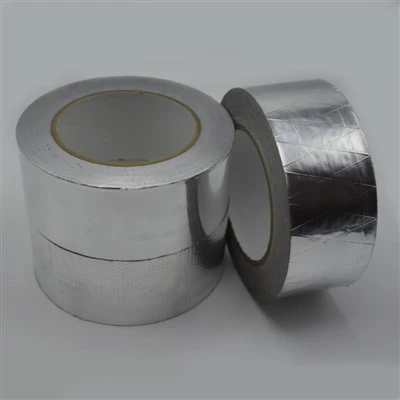
Now, let’s get to the star here: aluminum foil insulation tape. First, what it is, for anyone who doesn’t know—it’s a thin layer of aluminum foil laminated to a backing (usually acrylic or rubber adhesive, which sticks to almost anything) with a release liner on the other side. The big superpower here is its emissivity rating—like, 0.05, which is basically perfect for reflecting radiant heat. Radiant heat is the stuff that travels through air or space, like the sun beating on your roof, or a furnace heating up metal ducts. Most insulation materials (fiberglass, foam) only stop conductive or convective heat, not radiant. So if you’re in a space with metal, aluminum foil tape bounces that heat right back where it came from. That’s a game-changer for HVAC ducts—if your AC ducts are in the attic, the tape keeps the cold air inside from warming up before it reaches your rooms, so your AC doesn’t have to work overtime. Same with metal roofs: stick the tape on the underside of the roof, and it reflects the sun’s heat away from the attic, keeping your whole house cooler in summer.
Let’s break down the pros of aluminum foil tape compared to the others. First, it’s affordable—way cheaper than spray foam, almost the same as fiberglass in some cases, and way cheaper than rigid foam for small gaps. It’s super easy to work with—just peel and stick, no tools, no mess, no protective gear needed (well, maybe gloves if you don’t like foil on your fingers). It sticks to almost anything: metal, drywall, wood, plastic, even the weird uneven edges around pipe fittings. And it’s moisture-resistant—if it gets a little damp, it still works. No mold, no mildew, because aluminum doesn’t hold water. Also, it’s thin—so you can use it in tight spaces, like between duct joints, or around window frames, where you can’t fit a rigid board or even a batt.
But wait, it’s not all perfect—let’s be real, no material is. First, its R-value is lower than the others, on its own. If you just use aluminum foil tape and nothing else, you’re not gonna get the same insulation as a fiberglass batt or spray foam. It’s a complementary material, not a standalone one. Second, it’s not structural—you can’t use it to line an entire wall like rigid foam; it’s for sealing gaps, reflecting heat, and patching small areas. Also, the adhesive can fail in super hot environments—like if you’re using it on a roof in Arizona where temperatures hit 150°F, you need the right tape (we make high-temperature versions for that, but not all brands do). And it’s not great for blocking conductive heat through solid materials—so if you’re insulating a concrete floor, aluminum foil alone won’t cut it; you’d pair it with a foam board.
Now, let’s do a real-world comparison, so you can see when to pick which. Let’s say you’re a contractor working on a residential HVAC job: you installed new ducts in the attic, and the joints between the duct sections have gaps. Spray foam would be too messy for small joints, fiberglass wouldn’t stick to metal, rigid foam is too thick. So you’d use aluminum foil insulation tape to seal those joints—airtight, reflective, cheap, quick. That’s exactly the kind of job this stuff is made for. Another example: a homeowner with a metal shed that gets boiling hot in summer. Rigid foam would add too much weight to the walls, fiberglass would absorb moisture from the shed’s humid air, spray foam is too expensive. Stick aluminum foil tape on the inside of the metal walls, and it reflects the sun’s heat away—cutting their cooling bill by like 20%, which is way more than adding a thin layer of foam.
Wait, let’s address a common myth I hear all the time: “Aluminum foil tape is just a fancy tape, it doesn’t insulate.” No, that’s wrong. It’s insulation, but it’s specialized insulation. It’s not meant to be the only thing, it’s meant to work with other materials. Think of it like caulk—caulk doesn’t insulate a wall, but it seals the gaps that make other insulation work way better. That’s the same with foil tape. I’ve had customers test this: they had an attic with fiberglass batts, but their ducts were in the attic and lost 30% of their cold air through the duct joints. They added foil tape to the joints, and their energy bill went down 18% in a month. That’s real numbers, not marketing fluff.
Now, how does it stack up against the others on longevity? Aluminum foil is resistant to UV light, right? Wait, no—if it’s exposed directly to sun for a long time, it can break down. But if it’s installed on the underside of a roof, or on ducts (which are usually hidden), it can last 20+ years. Fiberglass can last 15-20 too, but if it gets damp, it’s done in 5. Spray foam lasts 30+ years, but that’s because it’s a thicker, more solid material. Rigid foam boards can last 25-30, same as spray foam. So foil tape’s longevity is good if it’s installed in the right spot, but not as long as spray foam or rigid foam.
What about sustainability? I get asked this a lot, too. Aluminum foil is 100% recyclable, way more than fiberglass (which has plastic binders that are hard to recycle) or spray foam (which is a petroleum product, hard to break down). Foil tape itself, when it’s at the end of its life, can be peeled off and recycled as scrap aluminum, or even reused if it’s still in good shape. Also, since it’s so quick to install, it reduces labor time—less energy used for installation, which is a plus for sustainability. Fiberglass requires way more labor, and spray foam uses a ton of chemicals during installation, so foil tape comes out ahead there.
Now, let’s talk about who should use what, to wrap this up. If you’re doing a small DIY HVAC project, sealing duct joints, patching small gaps in insulation, or insulating a metal shed/roof: aluminum foil insulation tape is your go-to. It’s cheap, easy, effective. If you’re insulating a new wall or attic from scratch, you’d pair foil tape with fiberglass or rigid foam to seal gaps and add reflectivity. If you’re doing a commercial project where airtightness is non-negotiable and you have the budget: spray foam is great, but use foil tape to seal any gaps that the spray foam misses. If you’re insulating a basement wall where moisture is a big issue: rigid foam is good, but use foil tape to seal the seams between the boards.
I should also mention that not all aluminum foil insulation tape is the same. There’s cheap stuff from big box stores that uses a weak adhesive that falls off after a year, or thin foil that tears easily. We make tape with heavy-duty aluminum foil, acrylic adhesive that works in extreme temps, and a backing that’s tear-resistant—so you don’t have to reapply it every couple years. That’s why it’s important to buy from a reputable supplier, not the cheapest option, especially for jobs that matter.
At the end of the day, the “best” insulation material depends on your project size, budget, and what you’re trying to do. But aluminum foil insulation tape is a versatile, underrated product that solves a lot of the small (but annoying) problems that the bigger, more expensive materials can’t handle. If you’re not sure what you need—whether it’s for your home, a commercial build, or a repair—reach out. We work with everyone from DIY homeowners to general contractors, and we’ll help you pick the right tape for your job, no pressure, no jargon.
Wait, that’s the real tea—you don’t have to overcomplicate it. A lot of people get stuck choosing between the big names, but sometimes the simplest, easiest material is the one that saves you the most time and money. For me, that’s why I love aluminum foil insulation tape: it’s not flashy, but it gets the job done, right when you need it.
Self Adhesive Aluminium Tape References:
- Thermal Insulation: Principles and Practice, John Wiley & Sons, 2019
- "Radiant Heat Reflection in Building Envelopes", ASHRAE Journal, Vol. 62, No. 8, 2020
- Comparative Analysis of Insulation Materials for Residential HVAC Systems, International Journal of Construction and Building Materials, 2021
- Aluminum Foil Adhesive Tapes: Performance Characteristics for Construction Applications, Journal of Adhesion Science and Technology, 2018
- Energy Efficiency of Metal Building Insulation with Radiant Barriers, Energy and Buildings, Vol. 158, 2017
Deqing Hongxin New Material Technology Co., Ltd.
As one of the most professional aluminum foil insulation tape manufacturers and suppliers in China, we also support customized service. Please feel free to wholesale high quality aluminum foil insulation tape in stock here from our factory. Welcome to contact us for quotation.
Address: No. 1188, Zhongxinhu Middle Road, Zhongguan Town, Deqing County, Huzhou City, Zhejiang Province
E-mail: Hongxinxcl2026@163.com
WebSite: https://www.hxnewmat.com/
