If you’ve ever stood on a city street corner, watched a fire crew hook up a hose to a bright red hydrant in minutes, and thought, “That’s one standard part—right?” you’re not alone. For years, I had the same question when I started at our fire hydrant valve supply company five years ago. I’d spent months learning the ins and outs of hydrant parts, but it wasn’t until I sat in on a call with a small-town fire chief that I realized how wrong that assumption was. He told us his department had tried replacing a hydrant valve with a part they ordered online, only to find it was too small to fit their existing hoses. That mistake delayed response time by 45 minutes on a grass fire and cost the town extra in repair fees. That day, I learned fire hydrant valves aren’t one-size-fits-all—they’re designed in specific sizes to fit different needs, locations, and equipment. Today, I want to break down why that matters, what sizes are actually available, and how choosing the right one can save lives, time, and money. Fire Hydrant Valve

First, let’s start with the basics: what is a fire hydrant valve, exactly? It’s the core component that controls water flow from the hydrant. When a fire crew opens the valve, water surges through the hose to the fire truck or directly to a fire site. Too small a valve, and water flow is restricted—meaning slower water deployment, lower pressure, and longer wait times when every second counts. Too big, and you risk damaging hoses, wasting water during routine tests, or even breaking the hydrant’s internal parts from sudden pressure surges. The chief’s story stuck with me because it’s a perfect example of how size misalignment doesn’t just inconvenience a team—it has real consequences.
Now, let’s talk about the actual sizes. You’ll hear two main measurements thrown around when it comes to these valves: nominal diameter (ND, also called nominal pipe size, or NPS) and outlet size. These are not the same thing, and mixing them up is how mistakes happen. Most standard fire hydrant valves come in two primary nominal sizes: 2.5 inches and 4 inches. Wait, I know that sounds like a small difference, but let’s get specific. The 2.5-inch valve is the workhorse for residential areas, small neighborhoods, and local roads. Why? Because the standard fire hose used in most community fire departments has a 2.5-inch coupling. That means if you’re hooking up a hose to fight a house fire or a small commercial building blaze, a 2.5-inch valve fits perfectly, delivering enough water flow for those smaller-scale jobs. It’s also lighter and easier for one firefighter to operate, which is a big deal when you’re rushing to a fire at 2 a.m.
The 4-inch valve, on the other hand, is built for larger-scale needs—downtown business districts, industrial parks, highway corridors, and areas with high-rise buildings. Here’s where it gets important: the 4-inch valve isn’t just a bigger version of the 2.5-inch. It’s designed to handle much higher water volumes. A 4-inch valve can deliver up to 1,500 gallons per minute (GPM), while a 2.5-inch typically tops out around 500 GPM. That’s the difference between putting out a single-family home fire and a warehouse fire that needs water for multiple hoses at once. I’ve seen this firsthand: last year, we supplied a set of 4-inch valves to a city in the Midwest that was upgrading its downtown hydrants. Before that, they’d used 2.5-inch valves for everything, and during a 2022 fire at a local factory, they had to hook up three separate hoses to get enough water—wasting time and stretching their crew thin. After switching to 4-inch valves, they were able to connect two large hoses at once, and the fire was contained in half the time.
But wait, there are more sizes than just 2.5 and 4 inches. For specialized uses, you’ll find 3-inch and 6-inch valves too. The 3-inch is a middle ground—used in mid-sized suburban developments where the area is between residential neighborhoods and large commercial zones. It’s not as common as the two primary sizes, but it’s a perfect fit for towns that are expanding and need a step up from the 2.5-inch without going full 4-inch. The 6-inch valve? That’s for major infrastructure projects, like new highway interchanges, power plants, or large stadiums where water demand is off the charts. You won’t find these in every neighborhood, but when you do, it’s because the location needs maximum water flow for large-scale emergencies.
Another key part of sizing is outlet configuration. Fire hydrant valves don’t just have one opening—most have multiple outlets for hoses. The size of those outlets varies too. Standard outlets are either 2.5 inches or 4 inches, but some hydrants have a combination: a 4-inch main outlet for large hose lines, and two 2.5-inch side outlets for smaller hoses. This is called a “combination valve,” and it’s super popular because it gives fire crews flexibility. For example, a crew can run a 4-inch hose for heavy water flow while also connecting a 2.5-inch hose for a secondary line. I always tell clients that when ordering valves, they need to consider both the main diameter and the outlet sizes—because even if the main valve is the right nominal size, mismatched outlets will still cause fit issues.
Let me also explain why these size standards exist. Fire hydrant valves are regulated by organizations like the American National Standards Institute (ANSI) and the National Fire Protection Association (NFPA). NFPA 19, the Standard for Fire Service Professional Qualifications, and NFPA 291, the Recommended Practice for Fire Flow Testing and Marking of Hydrants, set strict rules for valve sizes based on the area’s required fire flow. Fire flow is the amount of water needed to put out a fire in a specific building or location. For example, a single-story home might need 500 GPM, which calls for a 2.5-inch valve. A 10-story office building might need 1,500 GPM, which requires a 4-inch valve. Our team works closely with fire departments and municipal engineers to calculate their fire flow needs first, then recommend the right valve size—this is how we avoid the kind of mistakes that delayed that small-town fire response.
I should mention that there’s a common misconception online that all hydrant valves are the same size, so any replacement will work. That’s simply not true, and I’ve seen it lead to costly mistakes more times than I can count. Last year, we got a call from a rural fire department that had ordered a replacement valve from a generic online supplier for $50 cheaper than our standard part. When they tried to install it, the outlet was a half-inch smaller than their existing hydrant hose. They had to rent a specialized adapter, which cost them $300, and they missed a pre-scheduled routine test. The worst part? The supplier refused to take the valve back, calling it a “custom fit” even though it was labeled as a standard 2.5-inch valve. That’s why I always stress to anyone buying these parts: don’t cut corners on size verification. The right measurement is not just a number—it’s a critical part of your department’s emergency preparedness.
Now, let’s talk about how size impacts installation and maintenance. A 2.5-inch valve is lighter, so it’s easier for maintenance crews to lift and adjust in tight spaces, like narrow residential sidewalks. A 4-inch valve is heavier, so it requires more structural support at the base of the hydrant, which is something our design team builds into every valve we supply. We also make sure each valve’s size is clearly marked on the body, so firefighters and maintenance teams can quickly identify it in an emergency—no guessing, no fumbling with labels that rub off after years of sun and rain. Maintenance is another big reason size matters. If you have a 2.5-inch valve in a high-demand area (like a busy downtown), it will wear out faster from constant use, because it’s not designed to handle the same flow frequency as a 4-inch valve. Matching the valve size to the actual usage extends its lifespan, saving municipalities money on replacements down the line.
I want to touch on a less common but important point: international sizing differences. If you’re working outside the U.S., nominal sizes might be labeled differently. For example, in Europe, they use DN (Diamètre Nominal) measurements, where a DN65 is roughly equal to a 2.5-inch valve, and DN100 is a 4-inch valve. This is a detail that’s easy to overlook if you’re ordering parts across borders, which is why our team has a global resource guide for clients outside North America to avoid sizing mix-ups. We’ve worked with fire departments in Canada, Australia, and the UK, and we always double-check sizing standards before shipping to make sure every part fits correctly.
So, what should you do if you need a fire hydrant valve? First, don’t just order based on price or a generic size label. Start by checking your existing hydrant’s specifications—most municipal hydrants have a metal tag stamped with the valve’s nominal size and outlet dimensions. If you’re upgrading hydrants in a new development, work with a local fire marshal or engineer to calculate the required fire flow for your area. Our team has decades of experience helping both small rural departments and large city governments pick the right size valves. We don’t just sell parts—we walk through every step of the process, from sizing to installation tips, to make sure our clients have the right equipment for their needs.
At the end of the day, fire hydrant valves are a quiet, unspoken part of community safety. Most people don’t think about them until there’s a fire, but that’s exactly when their size and reliability matter most. I started in this industry because I wanted to make a difference, and that moment with the small-town fire chief is why I still show up to work every day. There’s no such thing as a “one-size-fits-all” fire hydrant valve—because every community, every street, and every emergency is different. The right size valve doesn’t just fit a hydrant or a hose; it fits the needs of the people who rely on it to keep them safe.
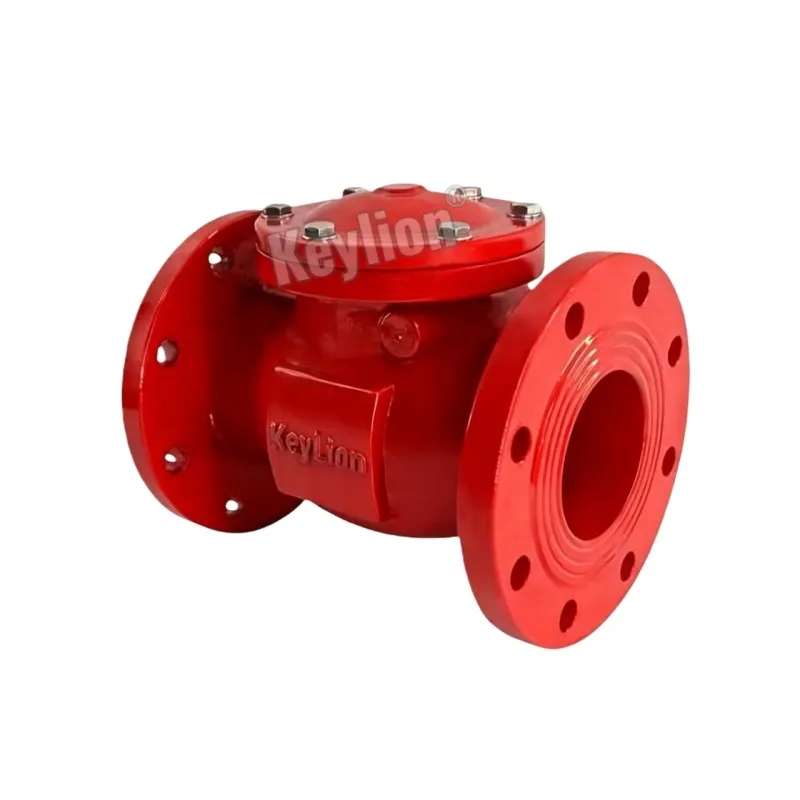
If you’re in need of fire hydrant valves for your municipality, fire department, or construction project, our team is here to help you find the exact size and specification you need. We work with clients of all sizes, from small towns to large cities, and we make sure every part meets NFPA and ANSI standards for reliability and performance. Don’t take chances with generic, ill-fitting valves—reach out to our team today to discuss your requirements and get the right equipment for your community.
Butterfly Valve References
National Fire Protection Association. (2023). NFPA 19: Standard for Fire Service Professional Qualifications.
National Fire Protection Association. (2022). NFPA 291: Recommended Practice for Fire Flow Testing and Marking of Hydrants.
American National Standards Institute. (2021). ANSI B16.1: Cast Iron Pipe Flanges and Flanged Fittings.
Quanzhou Keylion Valve Co., Ltd.
We’re known as one of the most professional fire hydrant valve manufacturers and suppliers in China, also support customized service. We warmly welcome you to buy high quality fire hydrant valve made in China here from our factory. If you have any enquiry about cooperation, please feel free to email us.
Address: NO.17, JINYUAN, ZHENSHAN VILLAGE, NANAN CITY, FUJIAN PROVINCE
E-mail: sales@keylionvalve.com
WebSite: https://www.keylion-valves.com/
