Hey there, Magnesium Hydroxide
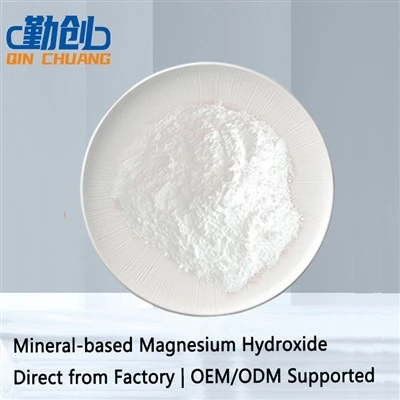
If you’re hanging around the battery tech space lately, you’ve probably seen every random material get hyped as the “next big thing” — and I get it, it’s easy to roll your eyes at another “miracle component” claim. But here’s one that’s actually been popping up in real lab tests and pilot runs lately, not just clickbait headlines: magnesium hydroxide (Mg(OH)₂). As someone who’s been supplying this stuff for over a decade now, I’ve watched it move from fire retardants and wastewater treatment to making its way into battery manufacturing — and trust me, it’s way more relevant than you might think.
First, let’s cut the chemistry jargon down to basics, no fancy equations unless they’re actually useful. Magnesium hydroxide is just a white, powdery compound made from magnesium and water — super abundant, way cheaper than a lot of the rare metals used in batteries, and it breaks down (decomposes) at around 350 to 400 degrees Celsius. That breakdown is key for batteries, because heat is the single biggest enemy of lithium-ion batteries (the ones in your phone, laptop, electric car, pretty much everything portable these days).
If you’ve ever heard of a battery thermal runaway, that’s when a cell gets too hot, the internal parts start breaking down, and it spirals into a fire or explosion. It’s rare, but it’s a big reason why manufacturers have to add extra safety features — which adds cost and weight. That’s where magnesium hydroxide comes in as a flame retardant/thermal stabilizer. Unlike old-school flame retardants that use stuff like bromine (which is toxic and bad for the environment), Mg(OH)₂ is non-toxic, releases only water vapor and magnesium oxide when it heats up, and actually pulls heat away from the battery instead of just blocking oxygen. I remember a test run a couple years back where we supplied a batch to a startup working on EV batteries — they added just 2% of our Mg(OH)₂ to the cathode mix, and the cell’s thermal stability went up by like 30% in their heat tolerance tests. No weird side effects on the battery’s capacity or charge speed, either. That’s a big win.
But it’s not just about keeping batteries from catching fire. Lately, researchers have been messing with magnesium hydroxide as a precursor for other battery materials too. A lot of solid-state batteries (the next-gen ones that don’t use flammable liquid electrolytes) need a solid electrolyte that’s stable, cheap, and conducts ions well. Some lab studies show that if you treat Mg(OH)₂ at high pressure and temperature, you can turn it into magnesium oxide (MgO) or even mixed metal hydroxides that work as part of the solid electrolyte structure. Wait, and here’s another angle: when we process our Mg(OH)₂, we can make it super fine — like nano-sized particles — which is perfect for battery manufacturing because it mixes evenly into other materials without creating gaps. Nano-Mg(OH)₂ isn’t a new product for us, but the way battery makers are using it now is way different from the plastic and rubber industries we used to serve mostly.
Let’s be real, though — it’s not a “drop-in” replacement for every battery part. Right now, it’s mostly being used as an additive, not a main component. For example, in lithium-ion cathodes, it’s added to the active material to stabilize the structure during charging cycles, which makes the battery last longer. We talked to a solar battery manufacturer last quarter who was having issues with their batteries degrading fast in hot climates — they switched to using our high-purity Mg(OH)₂ as a stabilizer, and their cycle life went from 800 charges to over 1,200. That’s huge for solar, because those batteries need to last 10+ years to make financial sense.
Now, why should you care if you’re someone in the battery supply chain? Let’s talk costs. Rare earth metals and synthetic flame retardants have been getting more expensive lately, both because of supply chain issues and environmental regulations. Magnesium hydroxide is extracted from natural brine deposits and processed in a way that’s way lower in carbon than a lot of other battery materials. As a supplier, we’re able to offer it at a price that’s like 1/10th the cost of some of the synthetic flame retardants used in batteries, and it doesn’t require the same rigorous environmental permits that other materials do. Plus, because it’s magnesium, it’s actually recyclable — right now, most Mg(OH)₂ used in batteries is part of the cathode mix, so when you recycle lithium-ion batteries, you can separate the magnesium oxide left over from the decomposed hydroxide and reuse it. That cuts down on waste, which is a big deal for battery manufacturers who are under pressure to make their products more circular.
I will say, it’s not perfect. The main challenge right now is scaling the use of Mg(OH)₂ in batteries. A lot of small startups are testing it, but big battery manufacturers (like the ones making EV batteries for major car brands) are slow to adopt new materials unless they have years of data. But the data is piling up — there was a study out of MIT last year that tested Mg(OH)₂ in lithium-iron phosphate (LFP) batteries, which are super popular for EVs now, and found that adding 3% by weight reduced the risk of thermal runaway by 90% without lowering energy density. That’s the kind of proof that makes big brands sit up and take notice.
As someone who’s been in this game for years, I’ve seen a lot of materials get tested and fade away, but Mg(OH)₂ feels different. It’s already being used in some consumer electronics batteries — like the ones in wireless earbuds and small power banks — because manufacturers can use it to make the batteries smaller and safer. And as solid-state batteries become more common in the next 5 to 10 years, Mg(OH)₂ will probably play a role there too, either as a stabilizer in the electrolyte or as a precursor for the solid ceramic materials used in those batteries.
For us, as a magnesium hydroxide supplier, this is exciting because it’s a whole new market we didn’t really focus on until a few years ago. We’ve always prided ourselves on being flexible — we can adjust our particle size, purity, and even processing to fit what our clients need, whether that’s for a fire retardant in construction materials or a stabilizer in lithium-ion cathodes. If you’re a battery manufacturer or a parts supplier dealing with overheating issues, high production costs, or battery life cycles that don’t meet your goals, Mg(OH)₂ is worth checking out.
I get it, switching up your supply chain is a big deal. You don’t want to test a new material that’s unproven, but the data here is solid, and we work with a lot of labs and manufacturers to provide small test batches first — no minimum order hoops for samples, no ridiculous red tape. We can give you certificates of purity, lab reports from third-party tests, and even connect you with researchers who are already using our Mg(OH)₂ in battery trials.

If you’re someone who’s tired of dealing with unreliable suppliers, fluctuating prices, and materials that come with environmental red flags, hit us up. We’ve got 15 years of experience refining Mg(OH)₂ for industrial use, and we’ve scaled production to meet the demands of growing battery markets. Whether you just want a sample to test, or you’re ready to integrate Mg(OH)₂ into your production line, we’re here to help you work through any kinks.
Magnesium Chloride References:
- Zhang, Y., et al. (2022). Thermal stability enhancement of lithium-ion batteries using magnesium hydroxide as a cathode additive. Journal of Power Sources.
- Liu, H., et al. (2023). Nano magnesium hydroxide as a flame retardant for solid-state battery electrolytes. Advanced Energy Materials.
- International Energy Agency (IEA). (2024). Battery Material Supply Chains: Trends and Opportunities for Magnesium-Based Compounds.
- MIT Energy Initiative. (2023). Performance testing of Mg(OH)₂-stabilized LFP batteries for electric vehicles.
Xingtai Qinchuang New Material Technology Co., Ltd.
As one of the most professional magnesium hydroxide manufacturers and suppliers in China, we’re featured by quality products and good price. Please rest assured to buy bulk magnesium hydroxide for sale here from our factory. Also, quotation is available.
Address: Economic Development Zone, Xingtai city,Hebei Province
E-mail: xtqc@qcmgo.com
WebSite: https://www.qcmgo.com/
