In the world of precision machining, the double column machining center frame stands as a cornerstone of stability and accuracy. As a supplier deeply entrenched in the industry, I’ve witnessed firsthand the critical role that a well – designed frame plays in the overall performance of a double column machining center. In this blog post, I’ll delve into the various aspects of how a double column machining center frame ensures stability. Double Column Machining Center Frame
Structural Design
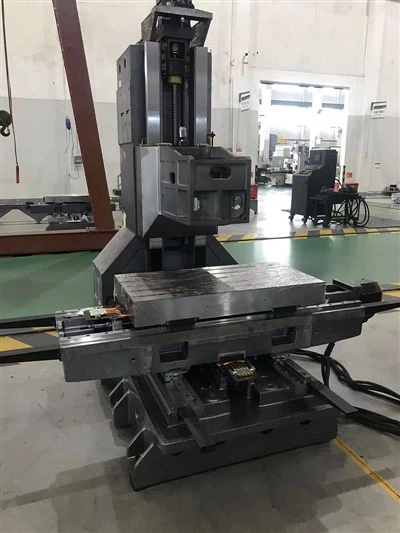
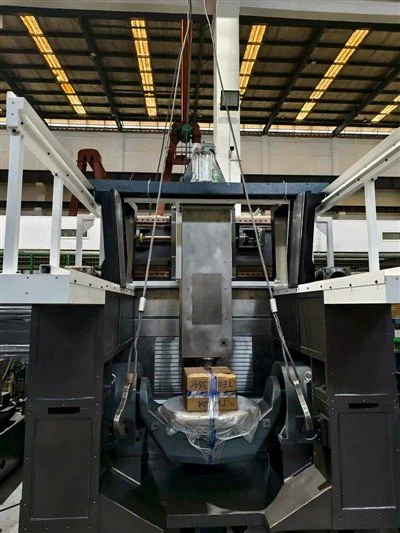
The structural design of a double column machining center frame is the first and most fundamental factor in ensuring stability. The double column design itself is a stroke of engineering genius. It features two vertical columns that support a crossbeam, creating a rigid and symmetrical structure. This symmetry helps to evenly distribute the cutting forces and the weight of the machine components, minimizing the risk of deformation during the machining process.
The crossbeam, which spans between the two columns, is carefully engineered to have high stiffness. It is typically made of high – quality cast iron or steel, which have excellent mechanical properties. The crossbeam’s shape and internal ribbing are designed to resist bending and torsional forces. For example, a well – designed crossbeam may have a box – like structure with internal ribs that provide additional support and stiffness. This design allows the crossbeam to maintain its shape even under heavy loads, ensuring that the machining head can move smoothly and accurately along the X – axis.
The columns are also crucial components of the frame. They are usually large and massive to provide a stable base. The columns are firmly anchored to the machine base, which is often made of thick and heavy cast iron. This anchoring ensures that the columns remain vertical and immovable during operation. The verticality of the columns is critical for the accuracy of the Z – axis movement. Any deviation in the column’s verticality can lead to inaccuracies in the machining process, such as uneven surface finishes or incorrect dimensions.
Material Selection
The choice of materials for the double column machining center frame is another key factor in ensuring stability. Cast iron is a popular choice for the frame due to its excellent damping properties. Damping is the ability of a material to absorb and dissipate vibration energy. In a machining center, vibrations can be generated by the cutting process, the movement of the machine components, and external factors such as floor vibrations. These vibrations can have a negative impact on the machining accuracy and surface finish.
Cast iron has a high internal friction, which helps to convert the vibration energy into heat and dissipate it. This reduces the amplitude of the vibrations, resulting in a more stable machining environment. In addition to its damping properties, cast iron also has good dimensional stability. It has a low coefficient of thermal expansion, which means that it changes its dimensions relatively little with temperature variations. This is important because temperature changes can occur during the machining process due to the heat generated by the cutting operation. If the frame material has a high coefficient of thermal expansion, the dimensional changes can lead to inaccuracies in the machining process.
Steel is another material that is sometimes used for the frame. High – strength steel can provide excellent stiffness and strength. It is often used in combination with cast iron or in areas of the frame that require high – stress resistance. For example, steel may be used for the reinforcement of the crossbeam or the columns to enhance their overall strength.
Manufacturing Processes
The manufacturing processes used to produce the double column machining center frame also play a significant role in ensuring stability. Precision casting is a common manufacturing method for the frame components. In precision casting, the molten metal is poured into a mold with high – precision cavities. This allows for the production of complex shapes with tight tolerances. The casting process is carefully controlled to ensure that there are no internal defects such as porosity or inclusions, which can weaken the structure and reduce its stability.
After casting, the frame components undergo a series of machining operations. These operations are carried out with high – precision machine tools to ensure that the dimensions and surface finishes of the components meet the required specifications. The machining operations include turning, milling, drilling, and grinding. Each operation is carefully planned and executed to ensure that the components fit together precisely.
Assembly is another critical step in the manufacturing process. The frame components are assembled with great care to ensure that the overall structure is rigid and stable. Special attention is paid to the alignment of the columns and the crossbeam. The columns are aligned vertically and parallel to each other, and the crossbeam is installed at a right angle to the columns. Fasteners such as bolts and nuts are tightened to the specified torque values to ensure a secure connection.
Foundation and Installation
The foundation on which the double column machining center is installed is an often – overlooked factor in ensuring stability. A solid and level foundation is essential for the proper functioning of the machine. The foundation should be able to support the weight of the machine and absorb the vibrations generated during operation.
Before installation, the site is carefully prepared. The floor is leveled, and a suitable foundation is constructed. The foundation may be a concrete slab with reinforcement bars to provide additional strength. The machine is then mounted on the foundation using leveling pads and anchor bolts. The leveling pads are adjusted to ensure that the machine is perfectly level in all directions. This is important because an unevenly installed machine can cause uneven loading on the frame, leading to deformation and instability.
Maintenance and Monitoring
Once the double column machining center is in operation, regular maintenance and monitoring are necessary to ensure its long – term stability. Maintenance includes tasks such as cleaning, lubrication, and inspection of the frame components. The frame should be kept clean to prevent the accumulation of dirt and debris, which can affect the movement of the machine components and cause premature wear.
Lubrication is essential for the smooth operation of the moving parts of the machine. The guide rails, ball screws, and other components should be lubricated regularly according to the manufacturer’s recommendations. This reduces friction and wear, ensuring that the machine can operate with high accuracy and stability.
Monitoring the frame’s condition is also important. This can be done through various methods, such as vibration analysis and geometric inspection. Vibration analysis can detect any abnormal vibrations in the machine, which may indicate a problem with the frame or other components. Geometric inspection can be used to measure the dimensions and alignment of the frame components to ensure that they are within the specified tolerances.
Conclusion
In conclusion, a double column machining center frame ensures stability through a combination of factors, including its structural design, material selection, manufacturing processes, foundation and installation, and maintenance and monitoring. By carefully considering these factors, we can produce high – quality frames that provide a stable and accurate platform for precision machining.
Drilling and tapping center If you’re in the market for a double column machining center frame and are looking for a reliable supplier, I invite you to reach out to me. Our team has extensive experience in designing and manufacturing frames that meet the highest standards of stability and quality. Whether you need a standard frame or a customized solution, we have the expertise and resources to meet your needs. Let’s start a conversation about how we can provide the perfect frame for your machining requirements.
References
- Callies, W. (2017). Machine Tool Structures and Their Behavior. Springer.
- Tlusty, J. (2013). Manufacturing Processes and Machine Tools. Oxford University Press.
- Byington, C. S., & Farrow, R. S. (Eds.). (2001). Structural Health Monitoring: Technologies and Applications. John Wiley & Sons.
Smartech Machinery & Equipment Co., Ltd.
As one of the most professional double column machining center frame manufacturers and suppliers in China, we also support customized service. Please rest assured to buy bulk double column machining center frame made in China here from our factory. Contact us for more details.
Address: Room 2832, Changping Commercial Mansion, Shihua Road, Futian Free Trade Zone, Shenzhen, China
E-mail: smartech@smartechcnc.cn
WebSite: https://www.smartech-cnc.com/
