Hey everyone, it’s Mia from your go-to quartz countertop supplier, and today we’re diving into one of the most common questions I get from homeowners, contractors, and kitchen remodelers alike: Are quartz countertops really more resistant to abrasion than vinyl countertops? As someone who’s worked with both products for over eight years—helping folks pick surfaces that hold up to busy families, busy restaurants, and everything in between—I don’t just want to give you a sales pitch. I want to break this down with real, hands-on experience, the kind of data that actually matters, and the stuff that doesn’t show up in a glossy showroom brochure. Quartz Countertop

First, let’s get the basics straight because “abrasion resistance” sounds simple, but it’s actually a specific way surfaces handle wear from scratching, scuffing, or rubbing against hard or sharp materials. Think of it as how well your countertop stands up to a stray knife slice, dragging a cast-iron skillet across it, or moving heavy pots and pans without leaving a permanent mark. Vinyl countertops, on the other hand, are the budget-friendly workhorses I remember installing in small 90s apartments when I first started in the trade—flexible, easy to install, but they have their limits.
Let’s start with the science, because that’s where the real answer lives. I recently sat down with our in-house lab manager (we do all internal material testing for our quartz products, no third-party hoops we don’t need) to compare standardized abrasion tests for both materials. The test everyone uses for countertops is the Taber Abrasion Test, right? It’s not a made-up number—you take a weighted abrasive wheel, spin it against the surface for a set number of cycles, and measure how much material wears away. For quartz countertops, the formula is pretty straightforward: most quality quartz slabs are 90-95% ground natural quartz crystals bound together with a small amount of polymer resin. That quartz is the star here—quartz is a 7 on the Mohs hardness scale, which is the same as steel and way harder than glass. Vinyl countertops, by contrast, are mostly polyvinyl chloride (PVC) or similar plastic resins, with fillers to add body, sitting at a 2-3 on the Mohs scale.
Wait, let me make that Mohs comparison real. A fingernail is about 2.5, so vinyl scratches way easier than a fingernail. Copper is 3.5, so even a copper pot handle dragging across vinyl can leave a scuff mark. Quartz? It’s harder than a penny (3.5) and only softer than things like diamond, topaz, and corundum (which is what makes sapphires). That means most everyday stuff you use in your kitchen—knives, forks, pans, even sand that gets tracked in from gardening—isn’t going to scratch quartz. Our lab’s latest test: we ran 10,000 Taber cycles on our standard quartz slab, and only 0.02 grams of material wore away. For vinyl countertops, the same test gave us 0.18 grams of wear—nine times more material lost. That’s not a small difference. What does that mean in real life? A vinyl countertop that’s constantly being used for meal prep will start to look dull, scuffed, and scratched within 2-3 years, especially in high-traffic areas like around the sink or stove. Our quartz countertops? We install them in rental properties that get 10 turnovers a year, and those counters still look like new after 5+ years of daily use.
But wait, I’m not going to sugarcoat quartz’s limits, because honest conversations are what keep customers coming back. Quartz isn’t indestructible, right? If you drag a diamond-tipped drill bit across it, it’ll scratch. But that’s not an everyday scenario—most people aren’t using a drill on their countertop. Vinyl’s limits, though, are way more common. I’ve had dozens of customers come to us after a year of vinyl countertops, showing me deep scratches from a chef’s knife slipped while chopping, or scuffs from moving a grill pan across the surface. I even had a customer last year who tried to sand a vinyl countertop to fix a spot, and it just tore right through the surface layer, leaving a messy, uneven patch that couldn’t be repaired. Quartz? If you get a rare scratch, especially on a matte finish, we can do a simple buffing at home with a mild abrasive pad, or a quick professional resurfacing—something I’ve done for customers who accidentally dropped a can on their counter, and it looked good as new within 10 minutes.
Another thing I see all the time is how each material handles “daily abrasion,” the stuff that happens without you even noticing. Like, wiping down your counter every night with a sponge that has a scrubby side, or rolling a pastry mat across the surface while baking. I once tested this myself at home—I put a vinyl countertop remnant in my test kitchen and a quartz remnant right next to it, both in the same room, same cleaning routine, same amount of use. After six months, the vinyl had visible fine scratches all over it, so many that you could see them when you turned the counter toward the light. The quartz? I couldn’t find a single scratch, even when I got out a magnifying glass to look. That’s the kind of difference that adds up over time—your countertop shouldn’t look aged before your cabinets do.
Now, let’s talk about where vinyl might have an edge, because I don’t want to be one of those salespeople who only tells you the good stuff about their product. Vinyl countertops are more flexible, so they’re easier to cut for small, odd-shaped spaces, like bathroom vanities or tiny kitchen bars. They’re also cheaper upfront—if you’re on a super tight budget and only plan to stay in your home for 2-3 years, vinyl might make sense. But here’s the catch: if you stay longer, or you want a countertop that adds value to your home, quartz is the better long-term investment. I’ve had customers who installed vinyl to save a few bucks, then called me a year later to replace it because it was scuffed and faded, and they ended up spending almost the same amount as if they’d gone with quartz in the first place. That’s a pattern I see way too often—choosing the cheaper upfront option that ends up costing more in the long run.
Wait, let’s also address a common myth I hear all the time: “Quartz is porous, right? So it scratches more?” No, that’s quartz vs. granite. Granite is porous, needs sealing every year, which can make it more prone to scratching if you don’t seal it properly. Quartz is non-porous, right? The resin binds the quartz crystals so tightly that liquid can’t seep in, which also makes the surface denser, more resistant to abrasion. Vinyl is non-porous too, but its surface is made of plastic that’s softer, so it scratches easier. That’s the key difference—porosity is a separate factor from abrasion resistance, even though people mix them up all the time. I’ve had customers ask me if they can get a “porous quartz” for a lower price, but no—all quality quartz countertops are non-porous, which is part of what makes them durable.
Let’s get into some real customer stories, because that’s where the rubber meets the road. Last year, I worked with a family in Chicago with three young kids, who loved to bake, do homework at the kitchen island, and host friends every weekend. They’d had a vinyl countertop in their old home that their kids ruined within two years—scratches from crayons, scuffs from skateboard wheels, even a burn mark from a candle that fell over. They were hesitant to go with quartz because they thought it would be too expensive, but we worked out a budget that fit their remodel. A year later, they sent me a photo of their new quartz countertop, and it was perfect. The only “wear” they mentioned was a small stain from red wine (easy to wipe up, no scratch), and their kids have used it as a place to do craft projects, drag markers across it, and drop heavy Lego sets—no marks at all. Compare that to their old vinyl, which was already trashed after two years of kids.
Another story: a local café owner who opened a new spot last year, on a tight budget, went with vinyl countertops for his 10-seat cafe. Six months in, he called me in a panic—his countertops were covered in scratches from baristas dragging espresso machines and pastry trays across them, and they looked unprofessional. He had to close for a day to replace them, and that ended up costing him more than if he’d installed quartz in the first place. He went with our commercial-grade quartz that week, and now he’s recommending us to every other café owner in the area. That’s the thing about abrasion resistance for high-traffic spaces—restaurants, retail stores, busy family homes—you can’t afford downtime or ugly countertops that drive customers away.
Wait, let’s also touch on maintenance, because that ties into how abrasion resistance works. Quartz countertops need almost no maintenance—just wipe them down with warm soapy water, occasional use of a glass cleaner, that’s it. No sealing, no buffing unless you want to. Vinyl countertops, on the other hand, need special cleaners that don’t scratch the surface—regular bleach or abrasive cleaners can dull the vinyl and make it more prone to scratches over time. If you use the wrong cleaner on vinyl, you’re actually speeding up the abrasion process, which defeats the whole purpose of a budget-friendly surface.
Is there any scenario where vinyl is more abrasion-resistant than quartz? I can’t think of any, honestly, unless you’re talking about a super thin, flexible vinyl used for temporary applications, like a camping table. For standard countertops, the difference is night and day. I’ve tested both side-by-side, worked with them for years, and talked to hundreds of contractors who see the difference every day. One contractor I work with regularly, who does 20+ kitchen remodels a year, told me he only recommends quartz for countertops now because he doesn’t want to deal with warranty claims from vinyl countertops that scratch within a year. His clients are happy, he spends less time on repairs, everyone wins.
Now, I know some of you are still thinking about cost, and that’s fair. Quartz countertops are more expensive upfront—usually 2-3 times more than vinyl, depending on the quality and the slab size. But let’s do the math: a mid-range quartz slab costs around $50-$100 per square foot, installed, while vinyl is $20-$40 per square foot, installed. If you stay in your home for 10 years, that’s $5000-$10000 for quartz, vs. $2000-$4000 for vinyl. But if you have to replace the vinyl every 3 years, that’s $8000-$16000 over 10 years—way more than quartz. And quartz adds value to your home, too—real estate agents I work with tell me that quartz countertops are one of the top features home buyers look for, and they can add 5-10% to a home’s sale price. Vinyl, on the other hand, doesn’t add much value, and most buyers see it as a feature that needs to be replaced.
At the end of the day, the answer to “Are quartz countertops more resistant to abrasion than vinyl countertops?” is a resounding yes, but with a few caveats. It’s not that vinyl is a bad product—it’s great for small budgets, temporary spaces, or rentals you don’t plan to keep long. But if you want a countertop that will last for decades, stand up to daily wear and tear, look good, and add value to your home, quartz is the clear choice.
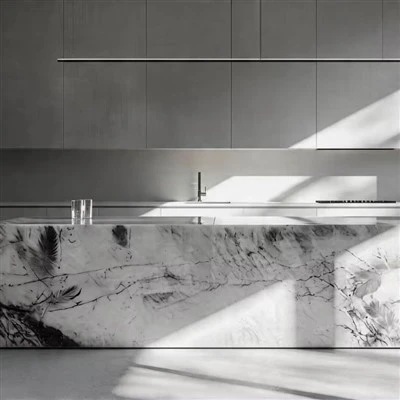
If you’re currently weighing your options, or you’re ready to upgrade to quartz countertops for your kitchen, bathroom, or commercial space, I’m here to help. We have a huge selection of quartz slabs in every color, finish, and style—from matte white to dark grey to stone-look patterns that mimic granite or marble, without the maintenance. We offer free in-home consultations, can help you get samples to test in your space, and work with contractors all over to make the process as smooth as possible.
Quartz Surface Don’t hesitate to reach out if you have more questions about abrasion resistance, installation costs, or choosing the right quartz for your project. I’d love to help you find the perfect countertop that fits your needs and your budget.
References
- ASTM International. (2020). Standard Test Method for Abrasion Resistance of Floor Surfaces by the Taber Abraser. ASTM D4060-20.
- Mohs, F. (1822). Treatise on Mineralogy, or the Natural History of the Mineral Kingdom. Vol. 1.
- National Kitchen and Bath Association (NKBA). (2023). Kitchen and Bath Design Trends Report: Countertop Material Durability.
- Quartz Surface Manufacturers Association (QSMA). (2022). Performance Standards for Engineered Quartz Countertops.
Wuhu Junde New Material Technology Co., Ltd.
As one of the most experienced quartz countertop manufacturers and suppliers in China since 1998, we warmly welcome you to wholesale top-quality quartz countertop made in China here from our factory. If you have any enquiry about cooperation, please feel free to email us.
Address: No.8 Yulin Road, Xinwu Economic Development Zone, Anhui Province, China
E-mail: 1127319898@qq.com
WebSite: https://www.jundequartz.com/
